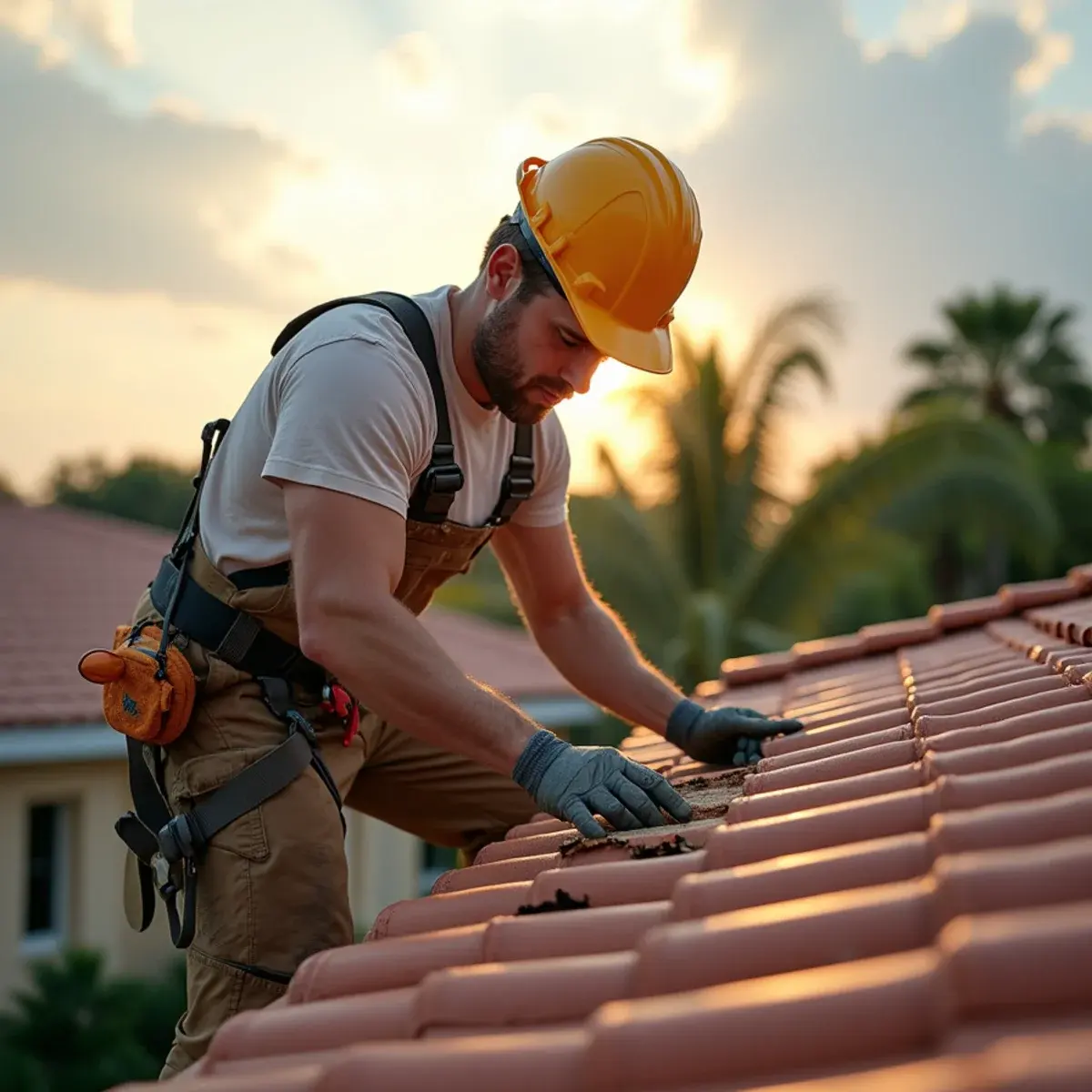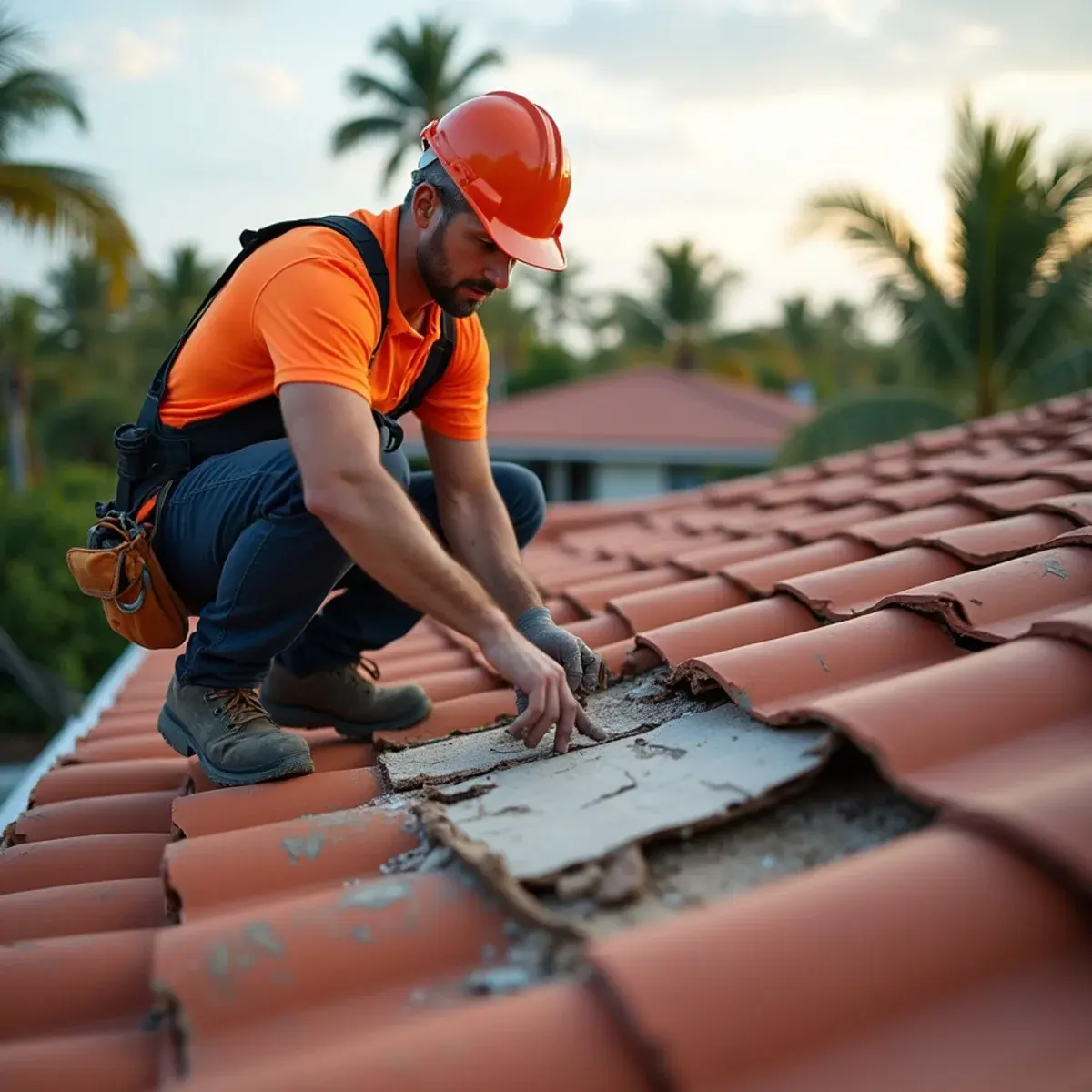
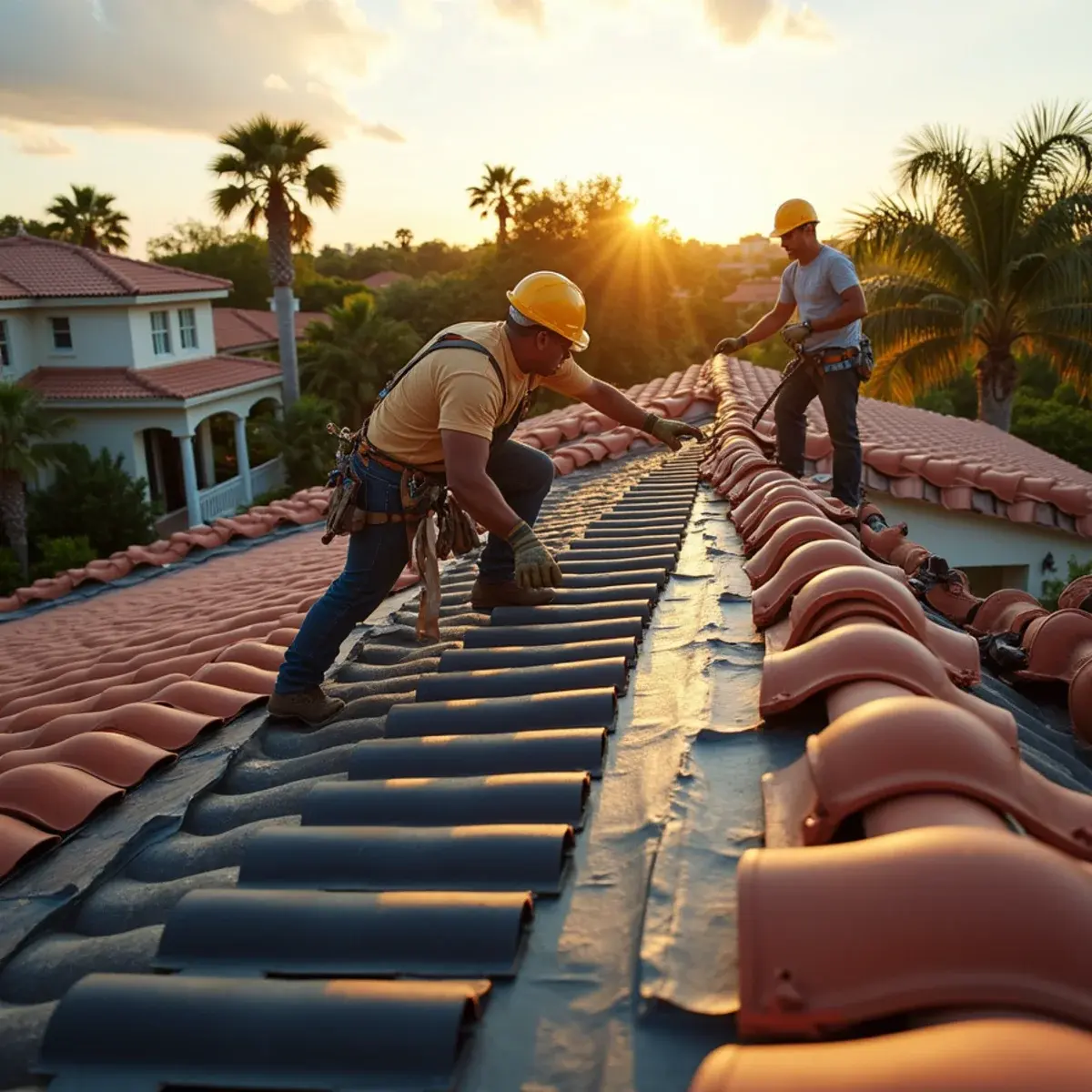
Tile roof underlayment replacement, also called a lift and relay or a tile roof re-felt, means taking the tiles off a Boca Raton roof, stacking them, replacing the worn underlayment and flashings beneath, and setting the same tiles back. It is the right job when the tile is sound but the waterproof layer under it has reached the end of its life, usually 20 to 30 years in South Florida. Call Boca Tile Roof Repair at (773) 207-0769 and we will send a licensed roofer who test-lifts tiles, checks the underlayment and deck, and tells you whether your tiles can be reused.
A lift and relay keeps your roof's look, your HOA's approved color and profile, and the cost of new tile. It is not always possible; this page explains how a roofer decides, which underlayment systems are used, and how permits work.
Why a Tile Roof Fails While the Tiles Still Look Perfect
Roof tile is a shell, not a seal. It sheds most rain and shades the roof, but water still gets beneath it through side laps, around penetrations and with wind-driven rain. The underlayment catches that water and carries it to the eaves.
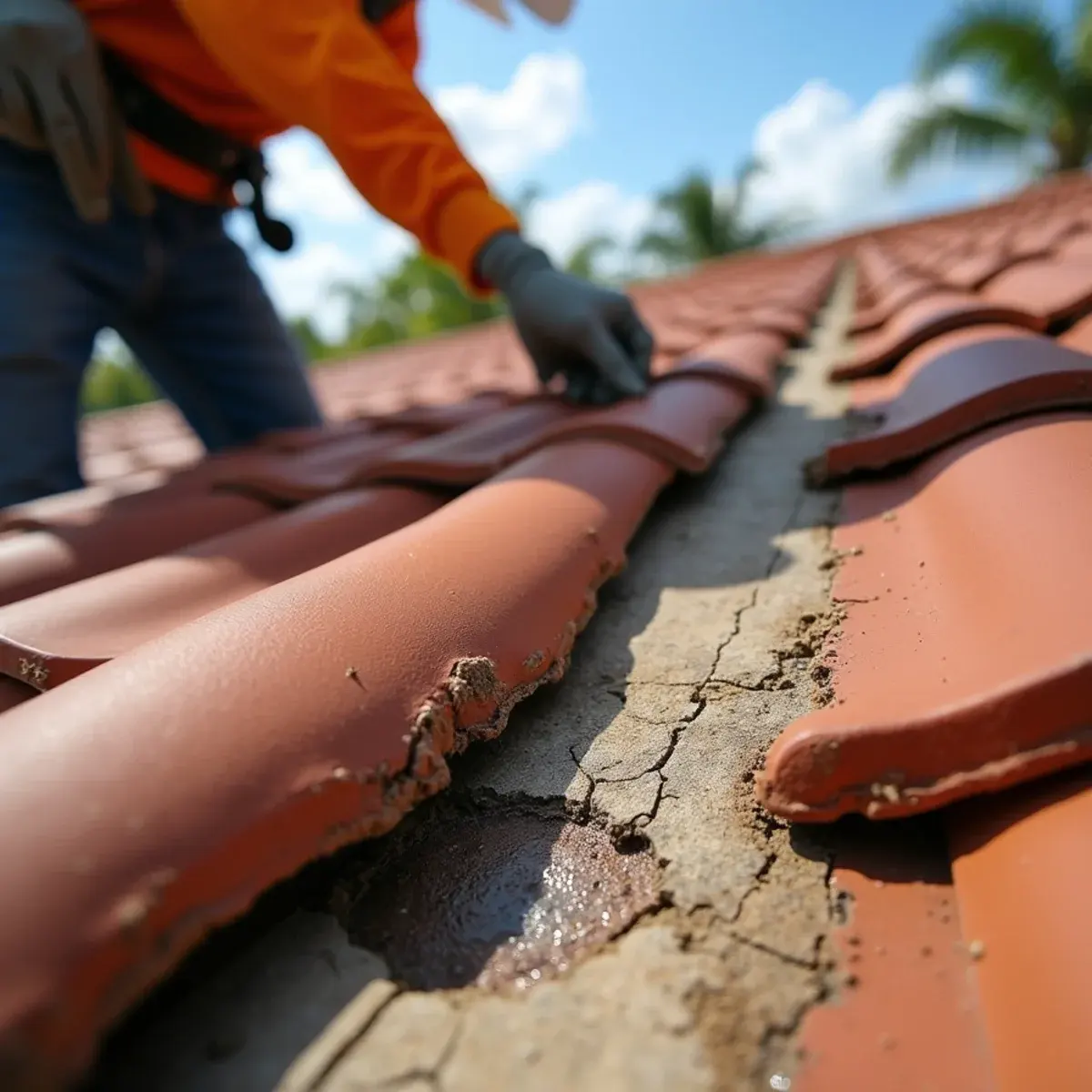
When the underlayment dries out, it cracks at the laps and pulls away around nails. From the street the roof looks unchanged, but water starts reaching the deck.
Signs the layer under the tile is wearing out
- Ceiling or drywall stains that return after a tile repair
- Dark streaks or soft spots on fascia and soffit at the eaves
- Felt that crumbles or flakes when a tile is lifted at the bottom course
- Decking that feels spongy when a roofer walks the slope
- Leaves and grit packed into valleys, holding water against worn material
A single cracked tile is a tile roof repair. Stains in several rooms on a 20-year-old roof usually point to the underlayment.
How Long Underlayment Lasts in South Florida Heat
In South Florida, tile underlayment typically lasts 20 to 30 years, while the tile lasts much longer. The space under the tile gets very hot in summer, and the June to September wet season cycles the material between wet and dry until asphalt-based layers shrink and crack.
Where a roof falls in that range depends on:
- The original system. Older hot-mopped felt systems and modern self-adhered membranes age differently.
- Pitch and orientation. Low slopes drain slowly, and south- and west-facing slopes run hotter.
- Valleys and debris. Valleys carry the most water and collect leaves from oaks and palms.
- Workmanship. Short laps, missing flashings and overdriven nails shorten the life of any material.
Timing matters in Boca Raton now. Many roofs here were replaced after Hurricane Wilma in 2005, so their underlayment is about 20 years old. In Parkland, homes from the mid-1990s and 2000s are reaching the same point street by street. See how long tile roof underlayment lasts in South Florida for more.
Lift and Relay: Reusing Your Tiles Over New Underlayment
A lift and relay tile roof job replaces everything under the tile and keeps the tile. It is sometimes sold as tile roof restoration, but it is a reroof in every sense except the covering.
How the job runs
- Test lift. Before quoting, the roofer lifts tiles in several areas to check attachment and breakage, then sources matching spares.
- Removal and stacking. Tiles are lifted by hand, cleaned of old foam or mortar, and stacked on the roof or on pallets.
- Tear-off to the deck. Old underlayment, battens and flashings come off to bare wood.
- Deck work. Rotted sheathing is replaced, and the deck is renailed and sealed with a secondary water barrier.
- New underlayment and metal. The new system goes on with new drip edge, valley metal and pipe and wall flashings, then the building department inspects.
- Relay. The original tiles go back with approved foam adhesive or fasteners, broken pieces swapped for matches.
- Ridge, hip and final. Ridge and hip tiles are reset, and the final inspection closes the permit.
The main reason to reuse roof tiles is the match: where the HOA set the profile and color decades ago, your own tile is the only exact match for your neighbors' roofs.

When Tiles Cannot Be Reused: Brittle, Discontinued or Mortar-Set Tile
The Florida Building Code allows sound tile to be reinstalled on a reroof, but cracked or broken tile cannot go back on. So the question is how many tiles survive removal, and whether replacements exist.
| Tile condition | Reuse outlook |
|---|---|
| Sound concrete tile, nailed or screwed down | Good; most tiles usually come off intact |
| Foam-set concrete tile | Fair; the foam bond causes more breakage on removal |
| Mortar-set tile | Poor; tiles often crack and the mortar must be chipped off |
| Old, brittle or heavily weathered clay or concrete | Poor; breakage can run too high to be worth it |
| Discontinued profile or color | Depends on spare tiles; HOA approval of a near-match may be needed |
What decides it
- Breakage rate. If too many tiles break during the test lift, the savings shrink fast.
- Matching. Discontinued tile can sometimes be covered by moving original tile to the street-facing slopes and putting a close match on rear slopes, if the HOA agrees.
When the tile cannot be reused, the honest recommendation is a tile roof replacement with new concrete or clay tile. For other materials, see roof replacement options.
Underlayment Options: Self-Adhered Membranes vs Hot-Mopped Felt Systems
Two families of underlayment dominate South Florida tile reroofs, both installed under Florida Product Approval.
| Self-adhered membrane | Hot-mopped felt system | |
|---|---|---|
| How it goes on | Peel and stick underlayment rolled onto the deck or over a fastened base sheet | A nailed and tin-capped felt base sheet, then a cap sheet set in hot asphalt |
| On-site equipment | No kettle; cold applied | Asphalt kettle on site, with smoke and odor |
| Sealing the deck | A fully adhered membrane bonds to the whole deck | Paired with a separate sealed-deck method such as taped seams |
| What to check | A high-temperature rating for use under tile | Crew experience and kettle placement near the home |
Self-adhered membranes
Many tile reroofs in Palm Beach County now use a peel and stick underlayment rated for high temperatures. It bonds to the deck, seals around fasteners and needs no kettle. Ask which product and approval number your roofer is using.
Hot-mopped systems
The traditional South Florida system is two-ply: a felt base sheet nailed and tin-capped to the deck, then a heavier mineral-surfaced cap sheet mopped in hot asphalt. Installed well, it remains a sound choice.
Synthetic underlayment
Some quotes list a synthetic (woven polymer) underlayment, which is light and tear-resistant. Under tile in Florida it normally needs to be part of an approved tile system rather than a stand-alone layer, so ask the roofer to show the product approval that pairs it with your tile and attachment method.
What the labels mean
Felt base and cap sheets are made to ASTM standards such as D226 and D6757, and self-adhered membranes are typically tested to ASTM D1970. Those numbers describe the material; the Florida Product Approval describes the whole installed system. The approval is the document that matters for your permit.
Either way, the tile attachment method has to match the underlayment's product approval.
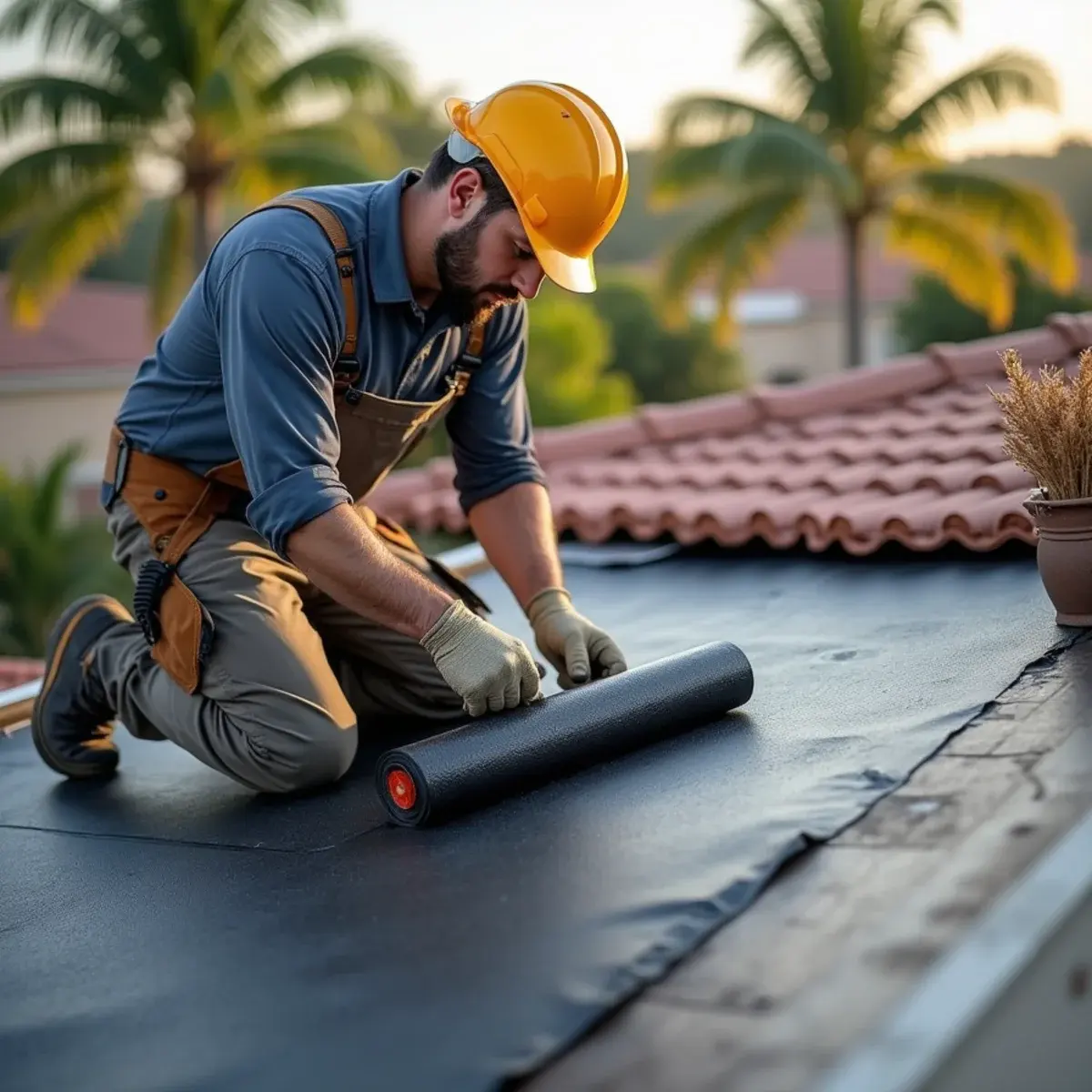
Section Repair vs Whole-Roof Underlayment: Valleys, Eaves and Slopes
Underlayment does not wear evenly. A roofer can sometimes do an underlayment repair on the parts that fail first instead of the whole roof.
Where it fails first
- Valleys. They carry water from two slopes and trap debris, so valley underlayment and metal usually go first.
- Eaves. All the water on a slope exits at the eave, and the bottom edge is the most exposed to sun.
- Low-pitch slopes. Water moves slowly and finds every weak lap.
- Walls, chimneys and pipes. Flashings at these points age with the underlayment around them.
- Flat-to-tile tie-ins. Where a tile slope meets a flat patio or garage roof, the transition often fails before either roof. Our flat roof repair page covers that joint.
When a section repair makes sense
Relaying one valley or slope can make sense on a younger roof with a local problem. Where all the underlayment is the same age, a section repair mostly buys time, and each separate job carries its own setup, permit and breakage. Florida's 25% rule can also affect how much of a section may be repaired on an older roof; the roof replacement page explains how the rule works since 2022.
Permit, Inspections and HOA Sign-Off
Replacing tile underlayment is reroofing, so it needs a permit even though the same tile goes back on. It comes from the City of Boca Raton, or Palm Beach County for unincorporated West Boca. The roofer we send pulls it, lists the product approvals, and books the inspections, typically an in-progress underlayment inspection before the tile goes back and a final.
Boca Raton is outside the High-Velocity Hurricane Zone, so the job follows Florida Product Approval and the Florida Building Code wind requirements. In Broward, the same job in Deerfield Beach or Parkland needs HVHZ-approved products and additional in-progress inspections, such as a tin-cap inspection. The service areas page lists every city we cover.
HOA sign-off
Even with the original tile going back, many Boca Raton associations want a submission. Expect to provide:
- Confirmation that the tile, color and profile are unchanged
- Details of any replacement tile and where it will go
- Staging plans for tile pallets and the dumpster
After final inspection, the sealed deck can be recorded on an updated wind mitigation report, so ask your roofer for photos of it before the tile goes back on.
What Affects the Cost of Underlayment Replacement
A lift and relay is labor-heavy, because every tile is handled twice. What moves the price:
- Roof size, pitch and shape. More squares, steeper slopes, and more hips and valleys mean more handling and more cutting.
- Tile attachment. Nailed tile lifts faster than foam-set or mortar-set tile, which takes longer and breaks more.
- Breakage and replacement tile. The number of new tiles, and whether they are stock, salvaged or special-order.
- Underlayment system. Self-adhered and hot-mopped systems are priced differently, as are premium high-temperature membranes.
- Deck repairs. Rotted sheathing found after tear-off is usually priced per sheet.
- Flashings and ridge. New valley metal, drip edge, wall flashing, and rebuilt ridges and hips.
- Permits, HOA and access. Permit fees, association requirements, tight side yards and pool enclosures that complicate staging.
Whether it beats a new tile roof depends mostly on breakage and tile availability. Our article on repairing or replacing a tile roof walks through the comparison.
Roof Age, Insurance Questions and the Paperwork After a Lift and Relay
Many Boca Raton owners start looking at underlayment when a renewal letter asks about roof age. Florida Statute 627.7011 says an insurer may not refuse to write or renew a homeowner policy solely because the roof is under 15 years old, and that a roof 15 years or older can be inspected by an authorized inspector: if it shows at least 5 years of useful life left, the insurer cannot refuse coverage solely on roof age. A tile roof with brand-new underlayment is the kind of roof that inspection is designed for.
The statute counts a roof's age from the last date on which 100 percent of its surface was built or replaced under the code in effect at the time. Whether your insurer treats a permitted, whole-roof lift and relay as that kind of replacement is a question to ask your insurer or agent before the work, not after, and the closed permit is the record that answers it. We don't interpret policies; this describes the law.
What the roofer should hand over
- The closed permit and final inspection result
- Product approval numbers for the underlayment and the tile attachment
- Dated photos of the deck renailing and the sealed deck seams before tile went back on
- The workmanship warranty, and the manufacturer's underlayment warranty if one applies
Those photos matter twice. The sealed deck counts as secondary water resistance on the wind mitigation inspection form (OIR-B1-1802), and the inspector can't see it once the tiles are back. More on the age question in roof age and Florida home insurance.
Why Homeowners Call Us Before Paying for a New Tile Roof
The most expensive mistake on a South Florida tile roof is replacing good tile because the felt under it wore out. That is the problem we are set up to catch.
- Someone checks reuse before anyone quotes a new roof. The roofer we send test-lifts tiles, checks how they were attached and tells you the expected breakage. If you already have a full tile roof replacement quote, a second look at reuse costs you a phone call.
- Matching is part of the plan. Spare tiles from the original job, salvage from hidden slopes or a close current match are sorted out before the tiles come off, so the street side still looks like your HOA approved it.
- Every roofer we send is licensed and insured in Florida, pulls the permit, and schedules the in-progress and final inspections.
- You get a price before any work. The written scope names the underlayment system, the per-sheet price for deck repairs and the tile breakage allowance.
- Phones are answered 24/7, so the call can happen the evening you notice the second ceiling stain.
Tile Underlayment Replacement questions in Boca Raton
How do I know the underlayment has failed?
The clearest signs are ceiling stains that return after tile repairs, soft or stained decking, and felt that crumbles when an eave tile is lifted. Age matters too: underlayment 20 years or older is worth checking even without symptoms. A roofer confirms it by lifting tiles at valleys and eaves and checking the deck from the attic.
Can the existing tiles be reused?
Often, yes, if the tiles are sound and come off without much breakage. Nailed or screwed concrete tile is the best candidate. Foam-set and mortar-set tile break more, and old, brittle or discontinued tile can make reuse impractical. The roofer we send test-lifts tiles before quoting so you know the expected breakage and whether matching replacements are available.
How long does a lift and relay take?
On a typical single-family Boca Raton home, the work on the roof usually runs from about one to a few weeks, depending on roof size, tile attachment and how much deck repair turns up. Permit approval, HOA review and any special-order replacement tile add time before work starts. Inspections and weather also affect the schedule, and your roofer sets a timeline once the scope is final.
Can underlayment be replaced without removing all the tiles?
For a section repair, yes. A worn valley, a run of eaves or a tie-in can be redone by lifting only the tiles over that area. Replacing the underlayment on the whole roof means every tile comes off and goes back on, which is what a lift and relay is. The roofer tells you which one the condition calls for after lifting tiles in several places.
What is the difference between underlayment repair and replacement?
A repair fixes a defined spot, such as a torn area around a vent or a failed valley, and ties new underlayment into the old around it. Replacement removes all of it down to the deck, renails and seals the deck, and installs a new system across the whole roof. Repairs make sense when the rest of the underlayment is still sound.
I was quoted a full tile roof replacement. Should I ask about reusing my tiles?
Yes. If the tiles are nailed or screwed concrete tile in good condition, a lift and relay may give you a new roof system while keeping the tile your HOA already approved. Ask the roofer to test-lift tiles and give you the expected breakage in writing. Brittle, mortar-set or discontinued tile is where reuse stops making sense.
Is replacing underlayment cheaper than a new tile roof?
Usually, because you are not paying for a full roof of new tile, but the gap is smaller than many owners expect. A lift and relay takes more labor, since every tile is handled twice, and breakage adds replacement tile. When breakage is high or the tile is discontinued, a new tile roof can be the better value. Ask your roofer to price both on the same scope.
Where we arrange tile underlayment replacement
Boca Raton and West Boca, plus nearby cities in Palm Beach County and the Broward High-Velocity Hurricane Zone. See all service areas.
- Tile Underlayment Replacement in Delray Beach
- Tile Underlayment Replacement in Deerfield Beach
- Tile Underlayment Replacement in Parkland
Also serving Boynton Beach and Coconut Creek.