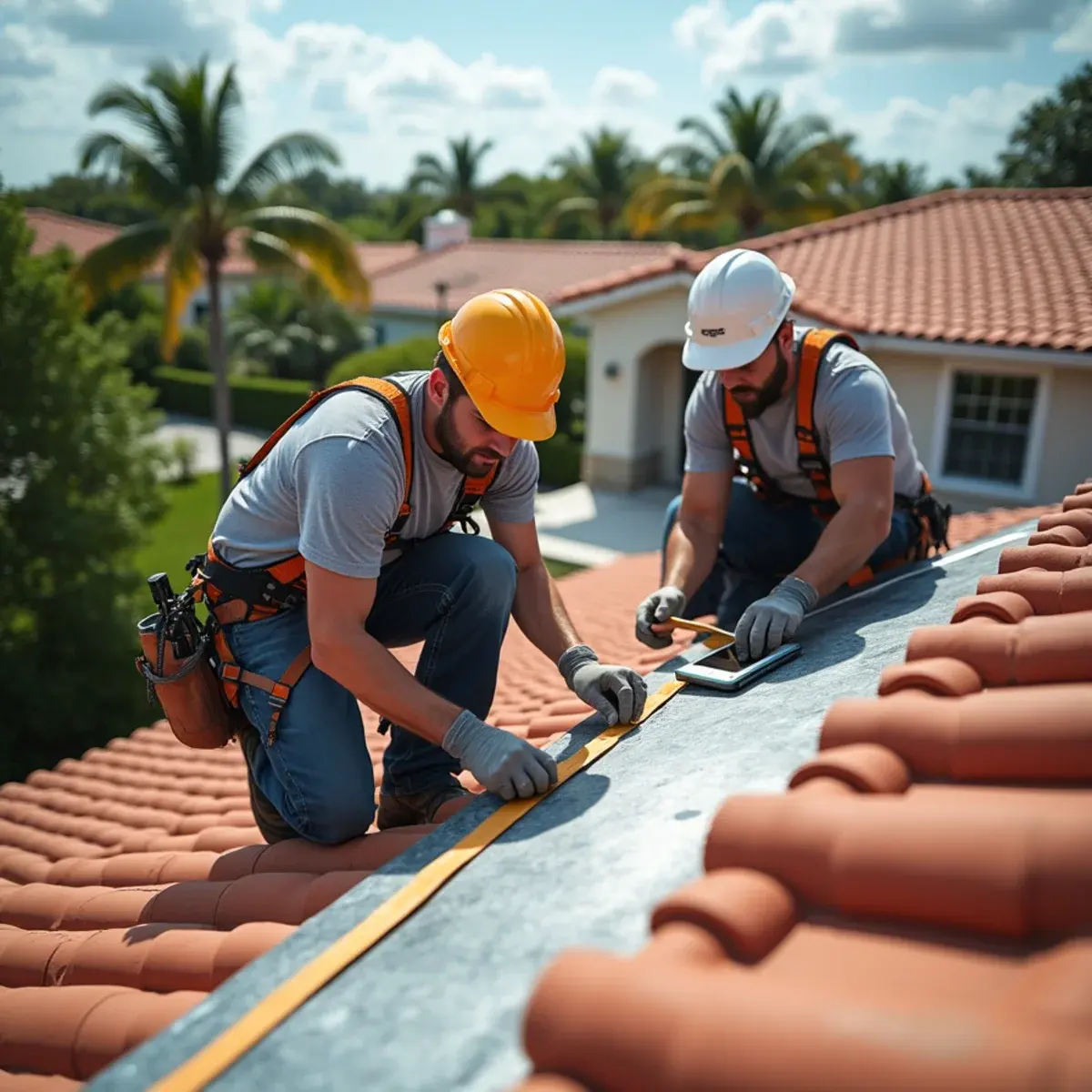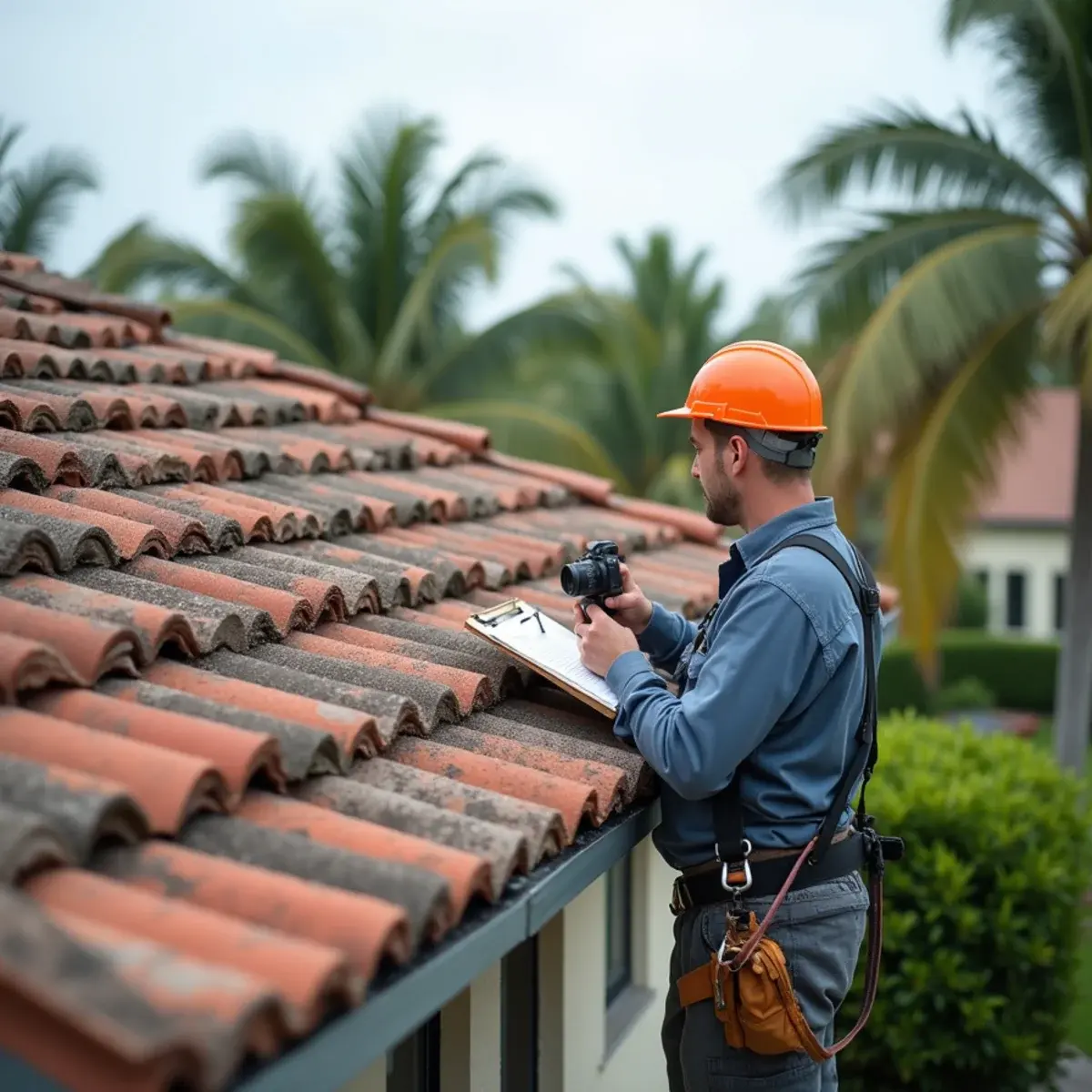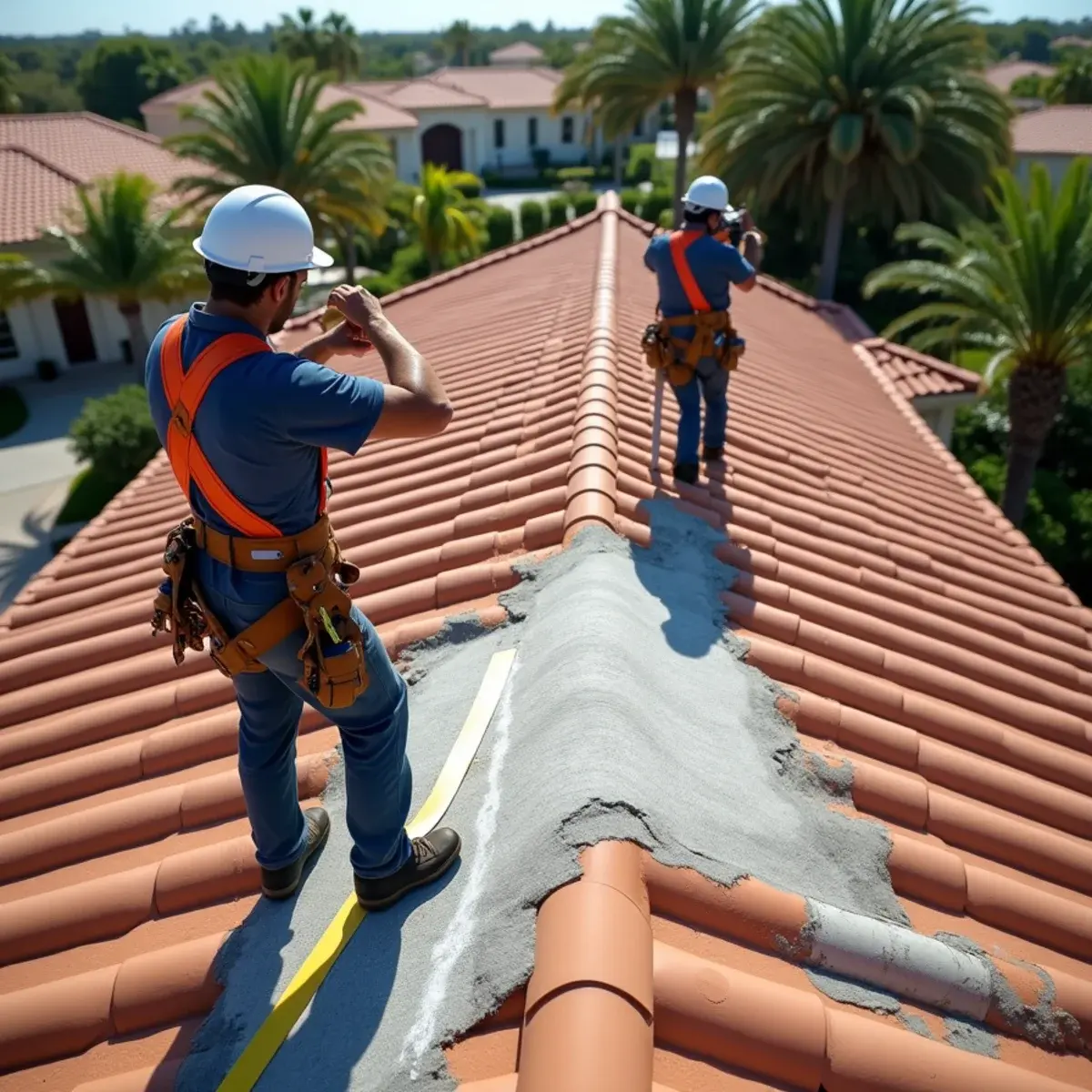
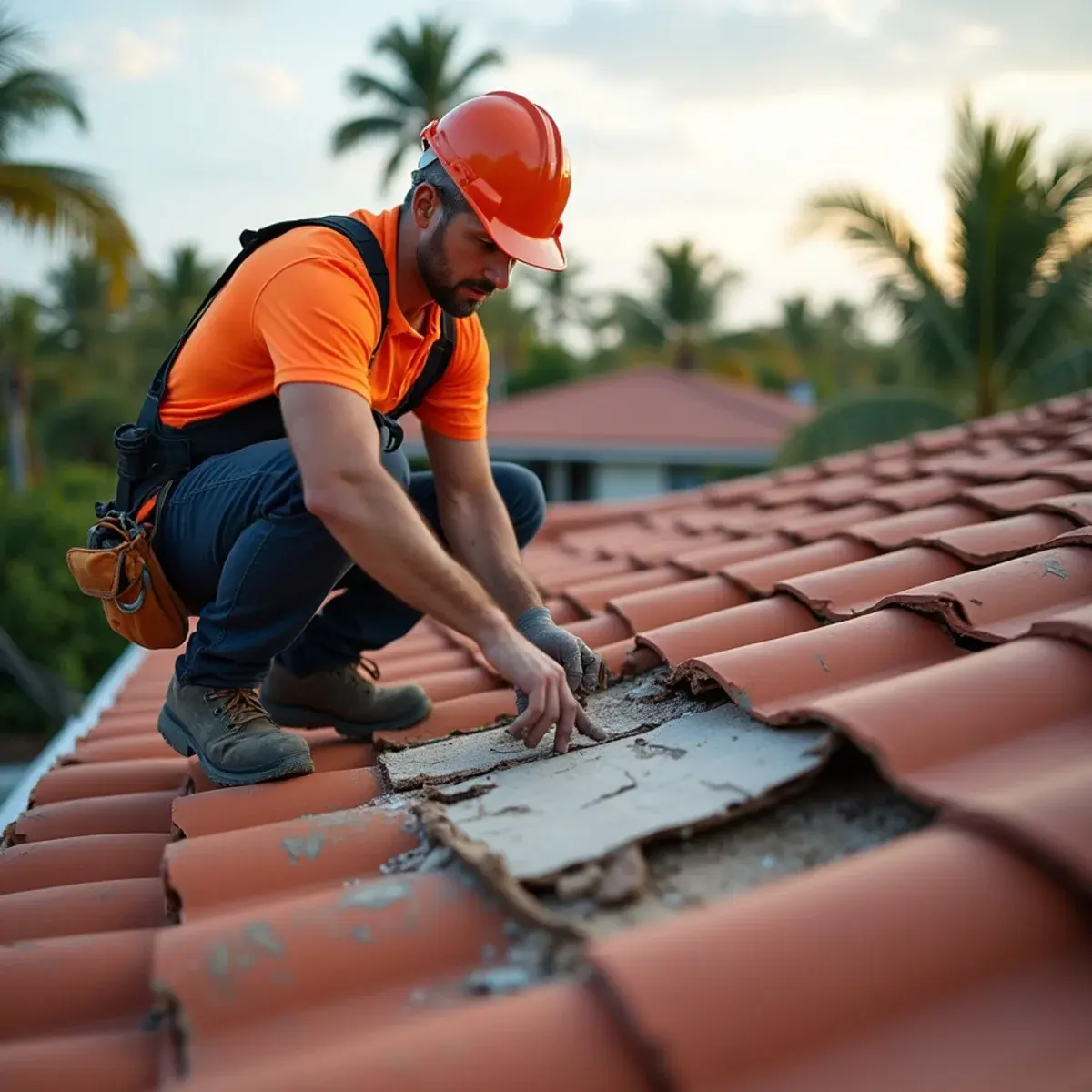
Repair a tile roof when the damage is limited: a handful of broken or slipped tiles, a cracked ridge, one worn valley, and underlayment that still has years left. Replace it, or at least replace the underlayment beneath the tiles, when that underlayment is 20 to 30 years old, problems show up on more than one slope, or the tiles have turned brittle. In South Florida the tile usually outlasts the waterproof layer under it, so the deciding question is rarely about the tiles you can see.
This guide walks through the checks a roofer makes before recommending either path, with the local details that matter in Boca Raton, Parkland and nearby cities.
Start With the Underlayment, Not the Tiles
Concrete and clay tiles shed most of the rain, but they are not what keeps water out of the house. That job belongs to the underlayment, the membrane fastened to the roof deck under the tile. South Florida heat, long wet seasons and constant UV through the gaps between tiles wear it out long before the tile itself gives up. Here it typically lasts 20 to 30 years.
That makes the age of the underlayment the first number to find. Your permit history with the city or county, closing documents from the home purchase, or your HOA's records will usually show when the roof was last installed. Many roofs put on in the wave after Hurricane Wilma in 2005 are now about 20 years old, which is why underlayment work and full reroofs are arriving at the same time in so many neighborhoods.
Signs the underlayment is near the end
- Stains on ceilings near exterior walls or below valleys, often after heavy rain rather than every rain
- Underlayment that cracks, crumbles or tears when a roofer lifts a tile to look
- Soft or stained decking visible from the attic
- Repeat repairs in different spots within a few years
If a roofer finds the membrane is still flexible and well bonded, repairs make sense. If it is brittle across the roof, patching tiles on top only buys time.
How Many Tiles Are Broken, and Why
A few cracked tiles are normal on a South Florida roof. Foot traffic from a cable or solar installer, a dropped palm frond or a pressure-washing crew can break several in an afternoon. Those are repair jobs, and a roofer can usually swap them out in a single visit. Our tile roof repair service in Boca Raton covers broken and slipped tile, ridge and hip mortar, and valley work.
The picture changes when breakage is widespread or the tiles themselves are failing.
When a repair is the right call
- Damage is confined to one area and has a clear cause
- The underlayment under the broken tiles is in good condition
- Matching tiles are available or can be salvaged
- The roof is well inside its underlayment life
When repairs stop adding up
- Concrete tiles have worn down to exposed aggregate or snap when stepped on
- Old clay tiles break faster than they can be replaced during the repair itself
- Mortar along ridges and hips is loose on most of the roof
- Each visit finds new problems on a different slope
Three Paths: Repair, Lift and Relay, or Full Replacement
Most tile roofs end up on one of three paths. The table below shows how a roofer typically sorts them.
| What the roofer finds | Likely path | Why |
|---|---|---|
| A few broken tiles, sound underlayment | Repair | The waterproof layer still works; only the surface needs attention |
| Tiles in good shape, underlayment 20+ years old | Lift and relay | Tiles come off, new underlayment goes down, the same tiles go back |
| Brittle, eroded or discontinued tiles and old underlayment | Full tile replacement | Neither layer has much life left |
| Damage spread over several sections on an older roof | Replacement, often driven by code | Florida's 25% rule may require the whole section to meet current code |
The middle option surprises many owners. With tile roof underlayment replacement, also called lift and relay, the existing tiles are removed and stacked, the old underlayment is torn off, the deck is checked and renailed, and a new underlayment system is installed before the tiles are set again. It only works when enough tiles survive removal.
When the tiles cannot be reused, a full tile roof replacement with new concrete or clay tile is the next step. If you are weighing a switch to metal or another material at that point, our roof replacement page covers the options.
Tile Matching and HOA Rules
Matching is often what tips a borderline roof toward replacement. Most Boca Raton HOAs set the tile profile and color, and many concrete tile lines from the 1980s and 1990s are no longer made. Even when the same tile is still sold, new tiles can look brighter than ones that have faded in the sun for 20 years.
Roofers have a few ways around this:
- Pull tiles from a hidden rear slope to fill gaps on the street side, then use new tile in back
- Source salvaged tiles that match profile and color
- Ask the HOA whether a close match is acceptable on a limited repair
Clay barrel tile on older east-side homes and in Old Floresta is harder still, because original tiles were often made in small runs. If no acceptable match exists and the HOA will not approve a mix, replacement may be the only route. Check your association's architectural review rules early, since approval can add weeks to the schedule.
Florida's 25% Rule and the Building Code
Building code can make the decision for you. Historically, repairing more than 25% of a roof section within 12 months meant bringing that whole section up to current code, which on an older roof usually meant replacing it.
Since a 2022 change to Florida law (SB 4-D, section 553.844), a roof that was built, repaired or replaced under the 2007 Florida Building Code or later (that edition took effect on March 1, 2009) can have only the damaged portion repaired to current code. Older roofs can still be pushed to full replacement when the damaged area is large enough. Your roofer confirms how this applies with the building department before the work is priced. Our guide to Florida's 25% roof rule explains it in more detail.
Parkland and Other Same-Age Neighborhoods
Some communities reach this decision street by street. In Parkland, large developments such as Heron Bay and Parkland Isles went up from the mid-1990s into the 2000s, so a lot of original underlayment there is now 20 to 30 years old. Parkland is in Broward County, inside the High-Velocity Hurricane Zone, so new underlayment and tile need HVHZ-approved products and the inspection sequence is stricter. Our Parkland tile roof page covers what that means locally.
In Boca Raton, the concrete tile roofs across the 1960s to 1990s subdivisions and country-club communities vary widely in age, because some have been reroofed and others have not. The permit record tells you which group your home falls into, and that single date answers half of the repair-or-replace question.
What Does a Roofer Check Before Recommending Repair or Replacement?
This is the part of the visit that decides the whole job, and it is worth knowing what a careful roofer actually does on a Boca Raton tile roof before giving you an answer.
Where the damage is, not just how much
Ten cracked tiles in the middle of a slope are a routine repair. One cracked tile beside a valley, a skylight or a wall flashing is more serious, because that is where water concentrates and where the underlayment is most likely to be wet already. A roofer who only counts broken tiles is missing half the picture.
Test lifts at the eaves and valleys
The underlayment shows its age first at the eaves, where water runs off, and in the valleys. Lifting a few tiles in those spots tells the roofer whether the felt is still flexible or cracks when touched, and how the tiles were attached: nailed tiles come up cleanly, foam-set and mortar-set tiles break more.
The deck from the attic
Stained or soft sheathing seen from the attic, especially in more than one area, points to an underlayment that has been letting water through for a while.
The paperwork
The permit history shows when the roof was installed and under which code, which matters for both the 25% rule and insurance. If you have spare tiles from the original job, that changes the matching plan.
A warning sign in the other direction
Be cautious of anyone who recommends a full replacement for a handful of cracked tiles without lifting a single one. Ask for photos of the underlayment and decking before you accept that the whole roof has to go.
Frequently asked questions
Can I replace just the underlayment and keep my tiles?
Often, yes. A lift and relay removes the tiles, replaces the underlayment, renails the deck and sets the same tiles back. It works when the tiles are sound and enough of them survive removal. Brittle concrete, old clay or mortar-set tiles can break at a high rate, so the roofer checks a sample area first and tells you how many replacements to expect.
How many broken tiles is too many to repair?
There is no fixed count. A dozen broken tiles over sound underlayment is a routine repair. A smaller number can still point toward replacement if the underlayment beneath them is brittle, the tiles are crumbling when touched, or the damage spreads across several sections of an older roof, where Florida's 25% rule may come into play.
Can a cracked roof tile be sealed instead of replaced?
A hairline crack can be sealed as a short-term measure, but sealant breaks down in South Florida sun and the crack usually keeps growing. Because the tile is the outer shield over the underlayment, the lasting fix is replacing it with a matching tile and checking the underlayment underneath while it is open.
Will my HOA let me use a different tile when I replace the roof?
That depends on your association. Most Boca Raton HOAs approve tile profile and color from a set list, and many require a submission with samples before work starts. Some allow newer colors or materials such as metal, others do not. Ask the HOA for its current roofing guidelines before you collect estimates, since the approved tile affects both price and schedule.
The bottom line
Start with the age of the underlayment, then look at tile condition, matching and HOA rules. Those four facts point most roofs toward repair, a lift and relay, or a new tile roof. If you want a roofer to look at yours and explain which path fits, call Boca Tile Roof Repair at (773) 207-0769. We answer 24/7, and the roofer we send inspects first and prices the work before anything starts. Every roofer we send is licensed and insured in Florida.