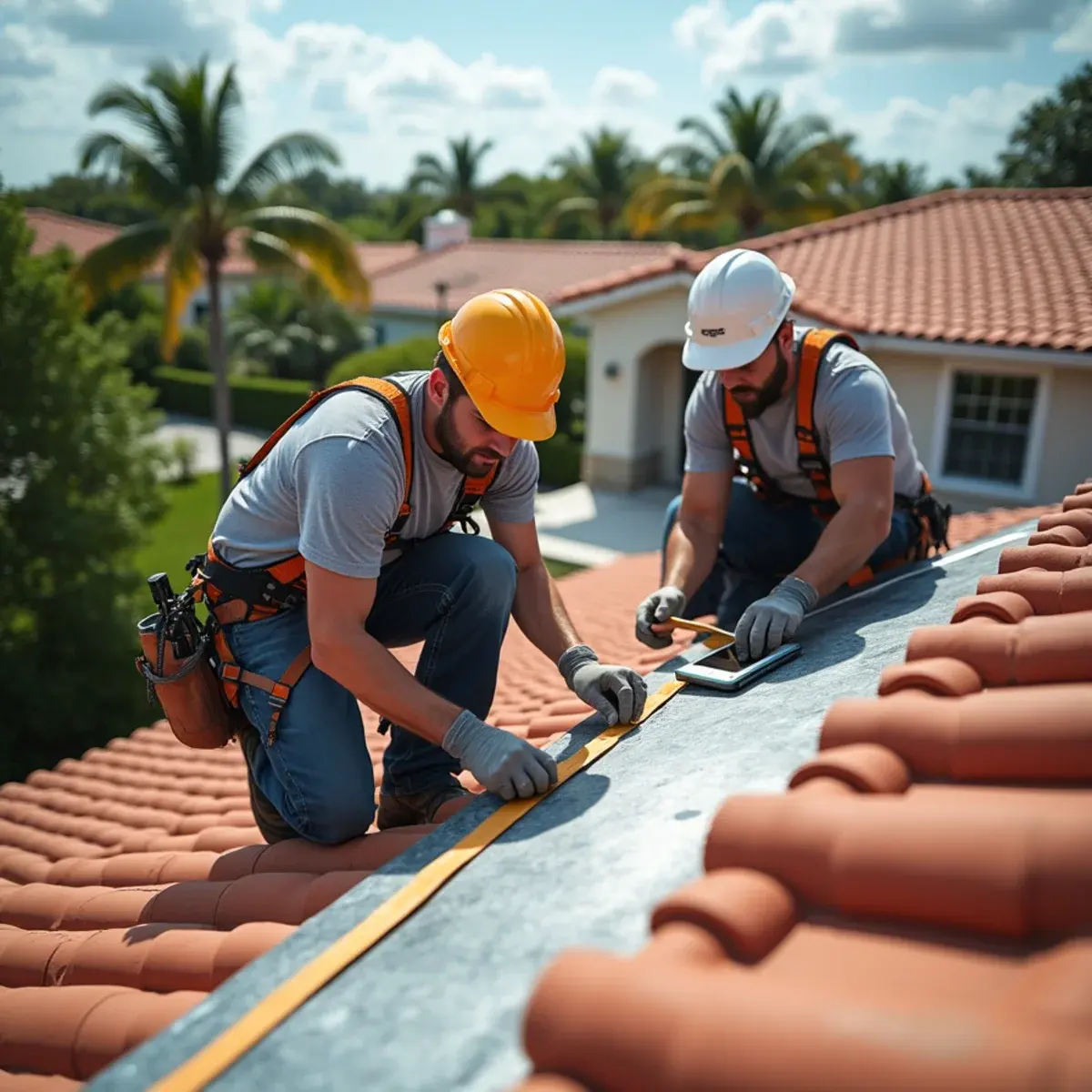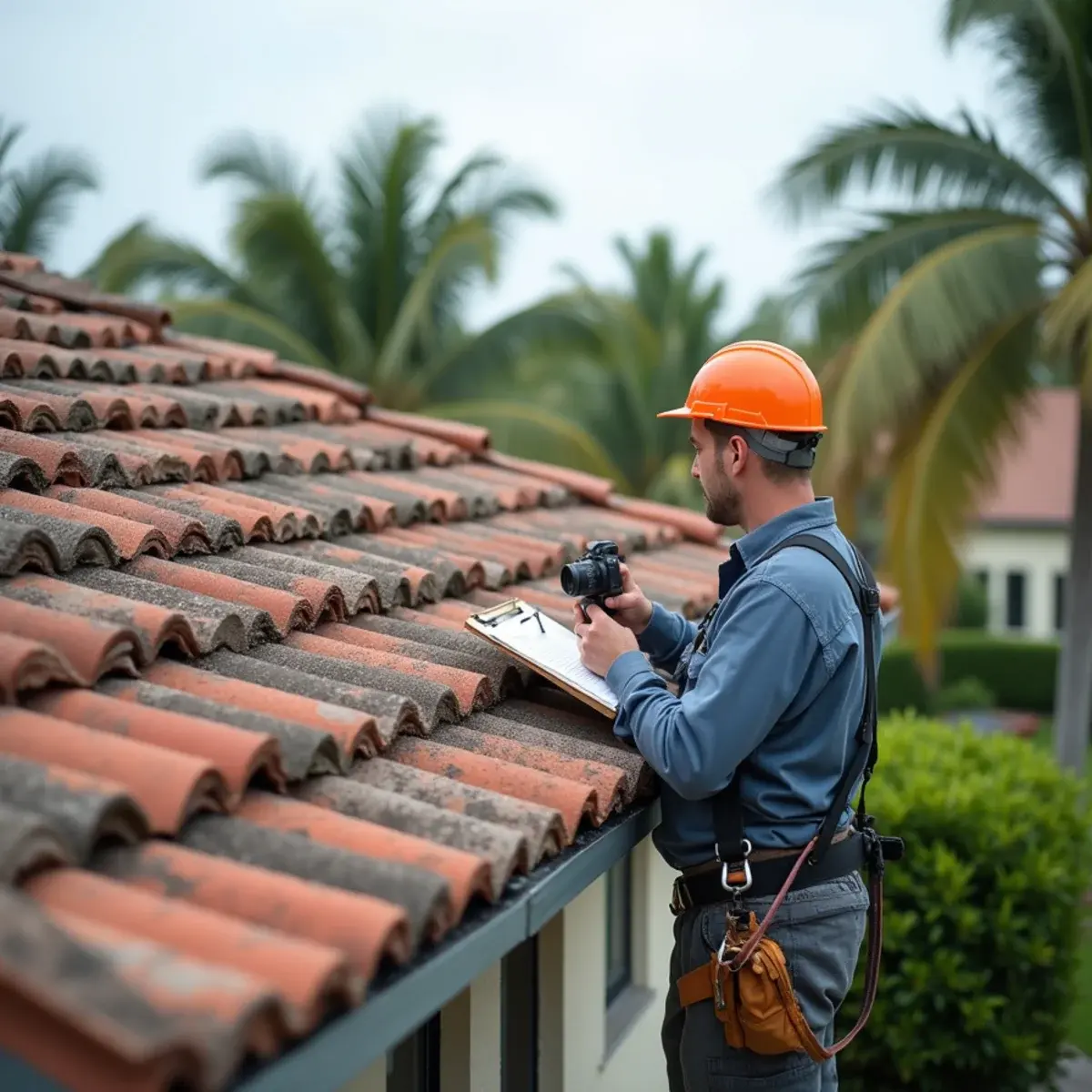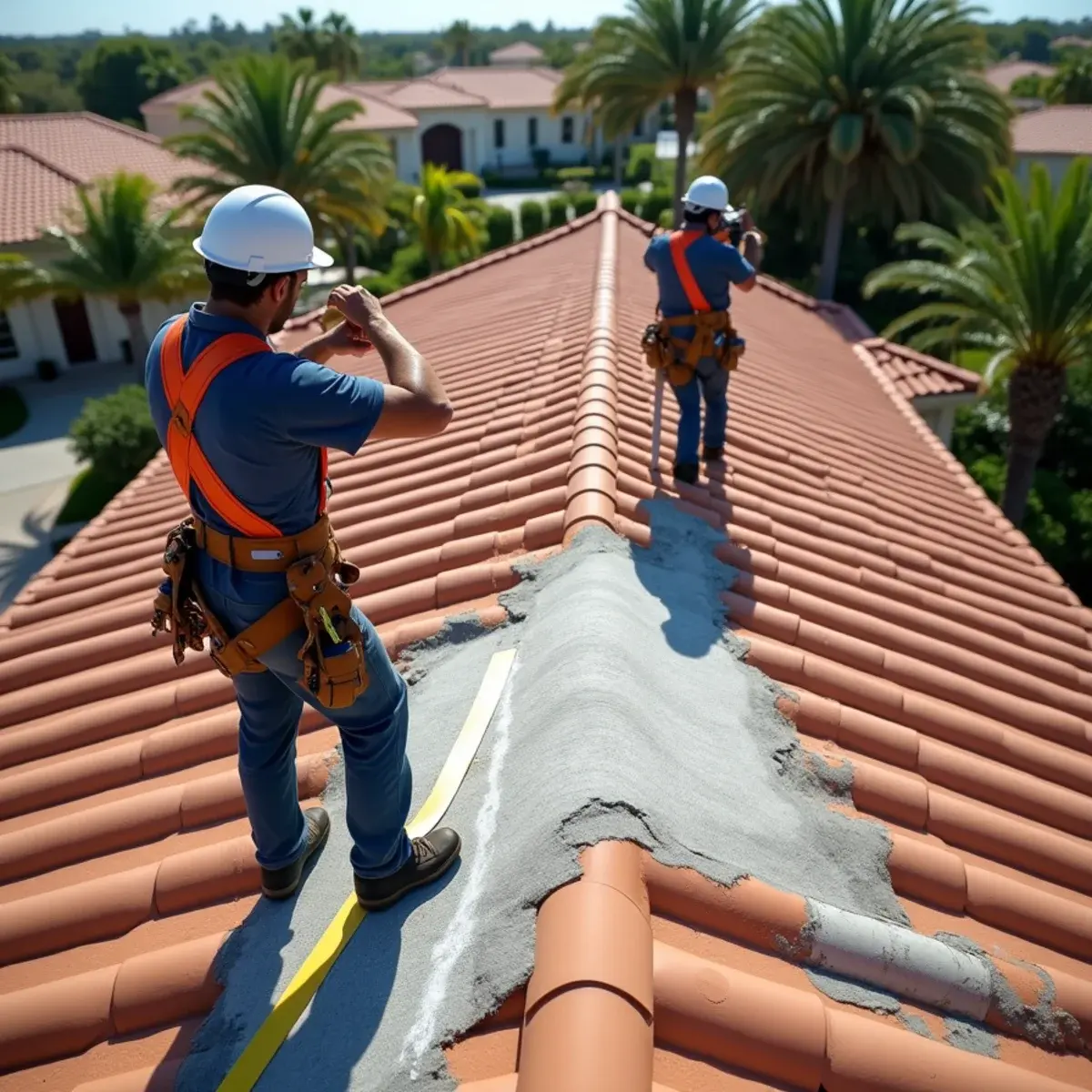
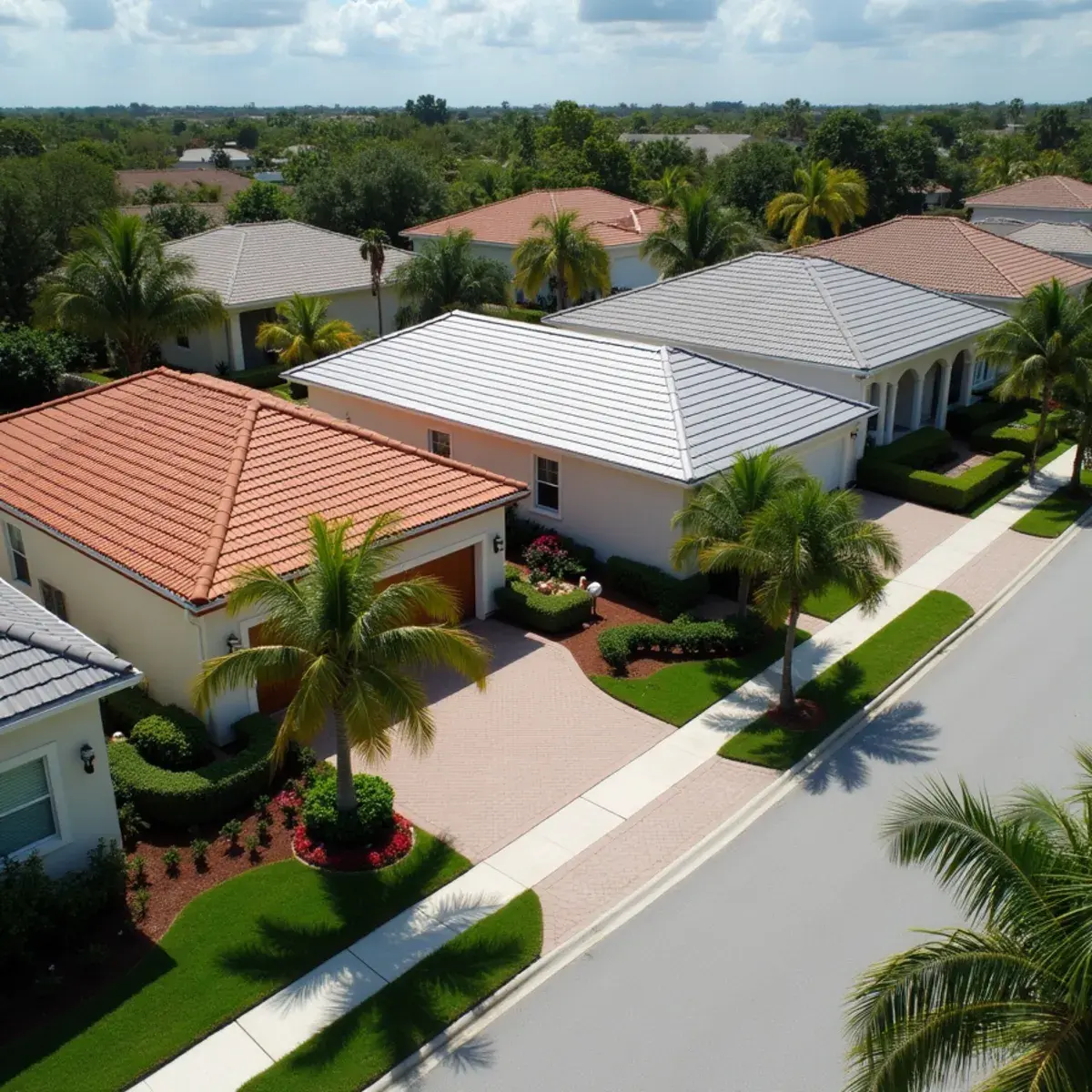
For most Boca Raton homes, tile is still the safest fit. It matches the Mediterranean look most homeowner associations require, handles the heat well, and the tile itself lasts for decades. Metal is the strong alternative where the association allows it, and aluminum is the metal to pick close to the ocean. Shingle is the lightest and simplest of the three, but it has the shortest life in South Florida sun and many gated communities here do not accept it.
The right answer for your house comes down to four things: your HOA rules, your roof structure, how close you live to salt water and how long you plan to stay. Here is how each material measures up.
Start With Your HOA and the Look of the Street
Boca Raton was incorporated in 1925 around Addison Mizner's Mediterranean Revival style, and that look still shapes what goes on a roof. Clay barrel tile covers many homes in Old Floresta and the older east side. Concrete tile runs through the 1960s to 1990s subdivisions and country clubs, from Royal Palm Yacht & Country Club and Camino Gardens to Woodfield, St. Andrews and Boca Bath & Tennis.
Most of those associations set the tile profile and color, and some accept nothing else. Others now approve standing seam metal in a short list of colors. Shingle tends to appear on older streets with no association and is often not an option inside the gates.
Florida law gives owners a little more room than it used to. Since 2024, Statute 720.3035(6) treats roof systems recognized by the Florida Building Code that meet ASCE 7-22 standards as hurricane protection, and a homeowners' association can't deny an application that meets the specifications it has adopted. It can still require the roof to fit the community's existing look, so color and style rules usually still apply.
Before you compare materials, get three things from your HOA:
- The current architectural guidelines and approved roof materials list
- Approved colors and profiles for each material
- How the application works and how long approval usually takes
The same thinking applies north of the city line. In Delray Beach, homes in the five historic districts can face design review for visible roofing changes, which our Delray Beach tile and metal roofing page covers in more detail.
Tile, Metal and Shingle Side by Side
Lifespans below are honest South Florida ranges, not brochure figures. Heat, salt, upkeep and installation quality all move them.
| Concrete or clay tile | Metal (standing seam) | Asphalt shingle | |
|---|---|---|---|
| Typical life in South Florida | Tile often 40 to 50 years or more; the underlayment beneath typically 20 to 30 | Often 40 years or more with a coastal-rated finish and sound seams | Often 15 to 20 years in full sun |
| Weight | Heaviest; the structure must be built for it | Lightest of the three | Light |
| Look | Mediterranean barrel, S-tile or flat profiles | Clean lines; some profiles imitate tile | Flat and plain |
| HOA acceptance in Boca Raton | Accepted almost everywhere | Growing; check the approved list | Often restricted in gated communities |
| Salt air | Tile is unaffected; metal flashings and fasteners can corrode | Aluminum holds up best; coated steel can corrode near the surf | Mostly sun and wind wear, not salt |
| Upkeep | Stay off it; watch ridge mortar and valleys | Check fasteners, sealant and trim | Watch for lifted tabs and lost granules |
No column wins outright. Tile wins on look and HOA fit, metal on weight and coastal durability when the right alloy is used, and shingle on simplicity where it is allowed.
Weight and Your Roof Structure
Tile is several times heavier than metal or shingle. A house that was built with tile has trusses and rafters sized for that load, so keeping tile or moving to metal raises no structural question. Going the other way, from shingle to tile, is where care is needed.
If a shingle house is going to tile, your roofer will want the framing checked, and the building department may ask for an engineer's letter showing the structure can carry the new load. Some homes need added framing first. Our roof replacement guide for Boca Raton walks through material changes, deck renailing and the permit steps that come with them.
Additions and patio roofs were often framed lighter than the main house, so your roofer checks each section.
Salt Air Near A1A: Aluminum vs Steel
Homes east of the Intracoastal and along A1A live with salt spray, and salt is what separates the two common metal choices.
Aluminum
Aluminum does not rust. It forms a thin oxide layer that protects the surface, which is why it is the usual pick for beachside and barrier island homes. It is also lighter than steel.
Coated steel
Steel panels rely on a metallic coating and a paint finish. Near the surf, scratches and cut edges can start to corrode, and many panel makers limit or change their finish warranties for homes close to salt water. Ask for the coastal terms in writing before you choose.
With either metal, the fasteners, clips and flashings must be compatible with the panels. Mixing metals invites corrosion where they touch. Our metal roof repair page shows what that wear looks like on older roofs. Tile itself shrugs off salt, but its valley metal, drip edge and fasteners still need corrosion-resistant materials near the coast.
Wind, Product Approval and Insurance
Wind performance depends on the installed system
Tile, metal and shingle can all be installed to meet the Florida Building Code wind requirements. What decides real-world performance is the product approval, the attachment method (foam adhesive or fasteners for tile, clip spacing for standing seam, the nailing pattern for shingle), the underlayment and whether the installer followed the approval exactly.
Boca Raton, Delray Beach and Boynton Beach sit in Palm Beach County, outside the High-Velocity Hurricane Zone, where Florida Product Approval and the code's wind-design rules apply. Deerfield Beach, Parkland and Coconut Creek are in Broward County, inside the HVHZ, where products need a Miami-Dade Notice of Acceptance or an HVHZ-approved Florida Product Approval.
Insurance and wind mitigation
A wind mitigation inspection records features such as the roof covering's permit date and code compliance, how the deck is attached, the roof-to-wall connections, the roof shape and any secondary water barrier. Florida requires insurers to offer credits for documented wind-resistant features, but what a given policy credits is up to the insurer, so check with your insurer or agent if premiums are part of the decision.
Roof age also comes up at renewal. Our article on Florida's 15-year roof age rule explains what the law says.
Which Roof Fits Which Boca Raton Home
A few common situations and where they usually lead:
- Your HOA requires tile and the house was built for it. Stay with tile. A tile roof replacement keeps the profile and color the association expects.
- You live near the beach and your HOA allows metal. Aluminum standing seam is worth a close look for its salt resistance and light weight.
- You want a lighter roof or a cleaner modern look. Metal, if the guidelines permit it.
- No association, a smaller budget up front, or a shorter stay. Shingle can make sense, knowing it will come due sooner in this climate.
Bring the HOA guidelines to the first visit so the roofer prices only what you can install.
Noise, Heat, Solar and the Mid-Life Costs Nobody Mentions
The comparison tables cover lifespan and wind. These are the questions homeowners ask a roofer once the decision gets real.
Is metal louder in the rain?
Not much, when it is installed over a solid plywood deck with underlayment, the way South Florida residential metal roofs are built. The loud metal roof most people remember is panels over open framing on a barn or carport.
Which keeps the house cooler?
Both can do well, for different reasons. Tile is heavy and sits off the deck, so it slows heat on the way into the attic. Light-colored metal with a reflective finish bounces more sunlight back. Dark shingle absorbs the most heat. Attic ventilation and insulation matter as much as the covering.
What about solar panels?
Standing seam metal is the easiest roof for solar, because mounts clamp to the seams without drilling. Tile can carry solar, but the installer has to remove and replace tiles around every mount, and tile broken by foot traffic is common. If solar is in your plans, tell the roofer before choosing.
The cost in the middle of a tile roof's life
Tile lasts for decades, but the underlayment beneath it usually needs replacing at 20 to 30 years, which is a real project. Metal and shingle don't have that mid-life step, though shingle needs a full replacement much sooner. Compare the whole life of the roof, not just the first installation, and see what a lift and relay involves when that time comes.
Panel types worth knowing
On metal, standing seam (concealed fasteners) and 5V crimp (exposed screws) are the two you will see quoted most. Galvalume steel and aluminum are the usual metals, and aluminum is the safer choice within sight of the ocean.
Frequently asked questions
Can I switch from tile to metal on a Boca Raton home?
Often yes, if your HOA approves it. Metal is much lighter than tile, so the structure is rarely a concern. The association decides the color and profile, the city issues the permit, and the new system needs Florida Product Approval. Get written HOA approval before you sign a contract, since some communities still allow only tile.
Is aluminum or steel better for a metal roof near the beach?
Close to salt water, aluminum is usually the better choice because it does not rust. Coated steel can work farther inland, but scratches and cut edges may corrode near the surf, and many makers limit finish warranties close to the ocean. Ask your roofer for the coastal warranty terms of each panel in writing.
Is a metal roof louder than tile when it rains?
Not noticeably on a typical South Florida home. Residential metal roofs here go over a solid plywood deck and underlayment, which deadens rain noise. The loud metal roofs people remember are panels over open framing on barns and carports. Attic insulation helps further.
How long does a shingle roof last in South Florida?
Expect roughly 15 to 20 years in full South Florida sun, which is often shorter than the rating on the package. Heat ages the asphalt, and strong wind lifts tabs that are not well sealed. Attic ventilation, the installation and the product all affect the result. Many gated Boca Raton communities do not permit shingle at all.
The bottom line
Tile, metal and shingle each have a place in Boca Raton, but your HOA guidelines, your structure and your distance from the ocean narrow the choice quickly. Start with the rules, then compare the materials you are allowed to use.
If you would like a roofer to look at your home and talk through the options, call Boca Tile Roof Repair at (773) 207-0769. We answer 24/7, and every roofer we send is licensed and insured in Florida.