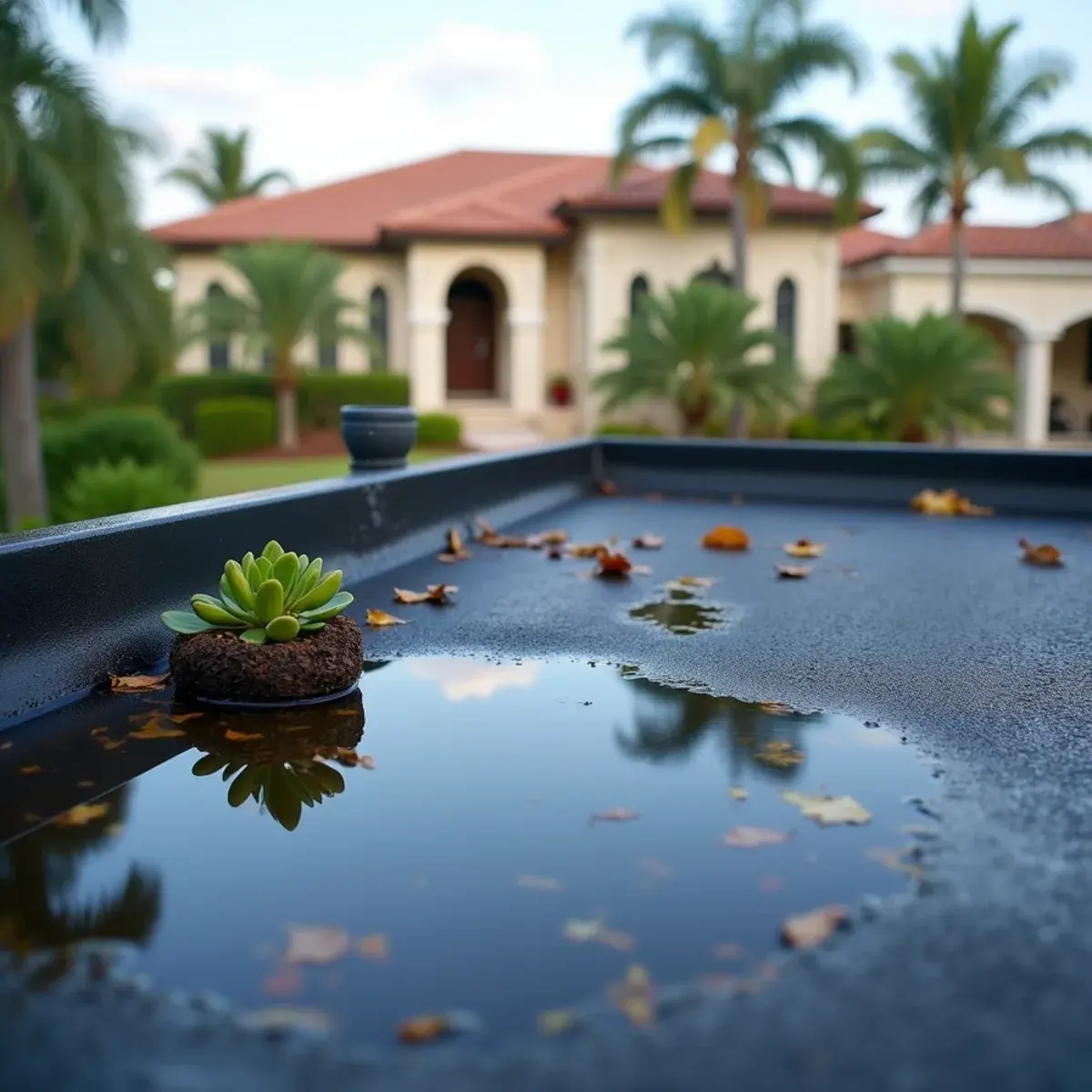
Ponding water is a problem when it is still sitting on a flat roof about 48 hours after the rain stops. That 48-hour line is more than a rule of thumb: the Florida Building Code defines "positive roof drainage" as a roof that drains within 48 hours of rain, and the National Roofing Contractors Association uses the same benchmark for ponding. A few shallow puddles that dry by the next afternoon are normal on a low-slope roof. Water that stays for days points to a drainage or structural cause, and the fix depends on which one it is: clearing a drain, adding slope with tapered insulation or crickets, or recovering or replacing the roof.
Almost every Boca Raton home has a flat or low-slope section over a patio, garage or addition, so this is one of the most common questions roofers hear during the summer rains.
How to Tell Normal Puddles From Ponding
South Florida's wet season runs roughly June through September, and afternoon downpours give you plenty of chances to watch how a flat roof drains. The test is simple: note where water sits after a heavy rain and look again two days later.
If you can see the roof safely from a second-story window, a balcony or the ground, check for:
- Water that is still there after 48 hours of dry weather
- Puddles that grow larger from one storm to the next
- Dirt rings, dark stains or algae marking where water sat once the roof is dry
- Low spots near walls, drains or the edge where the flat roof meets a sloped roof
Take photos with the date so your roofer can see the pattern. Do not walk onto a wet flat roof to measure a pond; soft or spongy spots can mean wet insulation or a weakened deck.
What Causes Water to Pond on a Flat Roof
Clogged drains and scuppers
The most common cause and the easiest to fix. Palm fronds, oak leaves, seed pods and loose gravel collect at scuppers and drains, and a single blocked outlet can hold back water across the whole roof.
Not enough slope
A flat roof is never meant to be truly flat. Current code generally calls for a minimum slope of about a quarter inch per foot for most membrane roofs on new construction. On a reroof, the code allows an existing roof that doesn't meet that minimum as long as it still provides positive drainage, which is why fixing the drainage is usually part of the job. Many older patio and garage roofs were built flatter, especially on homes from the 1950s through the 1980s.
Deck deflection
Joists or trusses that sag over a long span, a deck weakened by old moisture, or added weight from AC units and equipment all create low spots. Once a dip holds water, the extra weight can deepen it over time.
Built-up layers and old patches
Every recover, patch and coating adds thickness. Over the years these layers can form humps that act like small dams, or leave the field of the roof lower than the edges and drains. Raised tie-ins at walls and sloped roofs do the same.
Crushed insulation and AC condensate
Foot traffic from AC service and stored items can compress the insulation under a membrane and leave dished low spots around equipment. AC condensate lines that drain onto the roof keep the same spot wet every day, which looks like ponding even in a dry week.
Why Standing Water Shortens a Flat Roof's Life
A short-lived puddle does little harm. Water that sits for days, storm after storm, wears a roof in several ways:
- Membrane aging. Long wet periods followed by intense sun speed up the breakdown of asphalt, granules and coatings, and the surface under a pond often wears faster than the rest.
- Seam stress. Seams and laps are built to shed water, not to sit under it. Constant water keeps pressure on the adhesive or welded joints.
- Added load. Water weighs about 5.2 pounds per square foot for every inch of depth. A wide, deep pond adds real weight to a deck that may already be sagging.
- Algae and debris. Standing water grows algae, collects dirt and breeds mosquitoes, and that buildup can clog the drains further.
Many membrane warranties also exclude damage from standing water, so check the terms on your roof if you have them.
Where the Flat Roof Meets the Tile Roof
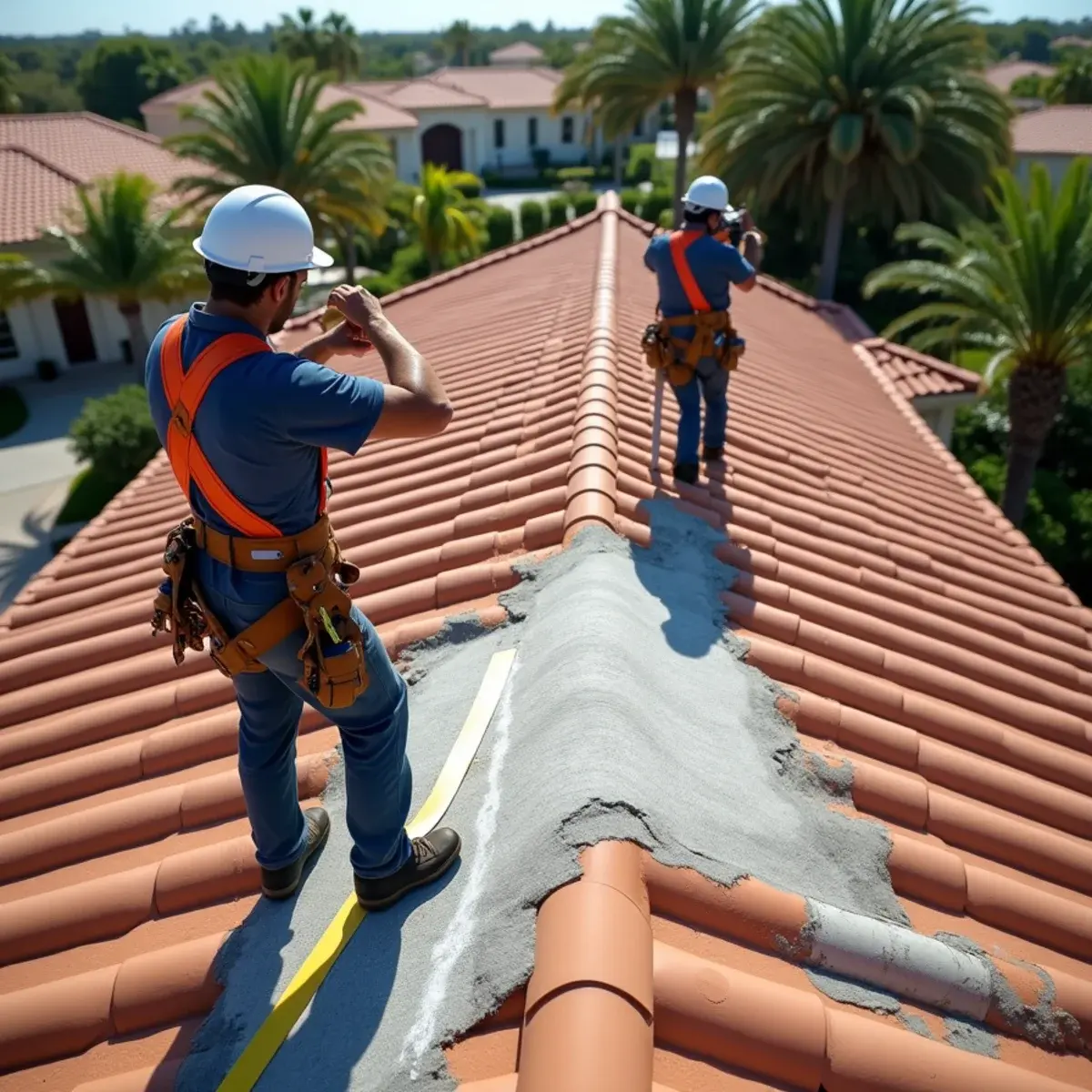
On a typical Boca Raton house, a concrete tile slope drains straight onto a flat patio or Florida room roof. That junction is where ponding does the most damage.
If the flat section is low at the wall or at the bottom edge of the tile, water sits against the tie-in flashing and the lowest course of tile day after day. The tie-in is where two roof systems overlap, and it is usually the first place a flat roof wears out. Our flat roof repair page explains how that junction is built and repaired.
The usual fixes here are a cricket that turns water away from the wall, re-sloping the flat area near the junction, or rebuilding the tie-in when the flat roof is redone. If the tile roof is near the end of its underlayment life, it often makes sense to plan both together, since a tile underlayment replacement also lifts the tile at the tie-in.
How Ponding Water Is Fixed
Roofers usually work from the simplest fix to the largest:
- Clear drains, scuppers and gutters. Add strainers so debris stays out, and keep overhanging branches trimmed.
- Add or enlarge drainage. A new scupper or drain at the true low point can empty a pond without changing the roof's surface.
- Tapered insulation or crickets. Tapered boards create slope toward the drains, and crickets steer water around walls, curbs and AC stands. This is usually done during a recover or replacement.
- Recover. A new membrane, sometimes over tapered insulation, goes over the existing roof. The code limits this: it is generally not allowed over a wet or deteriorated roof or where two roof coverings are already in place.
- Structural repair and re-slope. Sagging joists are reinforced and damaged decking is replaced so the surface drains as it should.
- Full replacement. The roof is torn off to the deck, the slope is corrected and a new system is installed.
A coating alone does not add slope. If coating is suggested, ask whether the product is rated for ponding water.
Permits and the HVHZ line
Most fixes beyond clearing drains need a permit. In Boca Raton and the rest of Palm Beach County, Florida Product Approval and local inspections apply. In Broward cities such as Deerfield Beach, inside the High-Velocity Hurricane Zone, membranes and insulation need HVHZ approval and inspections are stricter. Our Deerfield Beach flat roof page covers that area, and the Florida 25% roof rule explains when a partial repair can be enough.
What We Check First on a Boca Raton Flat Roof That Ponds
Ponding has a cause, and the cheapest fix is the one that removes it. On a patio, Florida room or garage roof here, a roofer works through the likely causes in order.
Start at the outlets
Before anyone talks about re-sloping, every scupper, drain and gutter outlet gets cleared and checked for a lip of old patching that sits higher than the roof surface. A surprising number of "ponding problems" end here.
Find the low spot's shape
A narrow, long pond along a wall or the tile roof edge usually points to a built-up tie-in acting like a dam. A round pond in the middle of a span points to deck deflection or crushed insulation. Water around an AC stand points to equipment weight or a condensate line.
Check underneath
A soft or spongy feel, or wet insulation found with a probe or moisture meter, means water has already gotten in. Then the job is a section replacement with corrected slope, not a coating.
Read the warranty
Many membrane warranties exclude damage from ponding or limit the size of a "birdbath" they will tolerate. If your flat roof is still under a manufacturer's warranty, the terms may decide how soon the drainage has to be fixed.
Look at the tile roof above
On many Boca Raton homes the main tile roof empties onto the flat section. A valley that dumps a whole slope's water onto one corner of the flat roof needs a diverter, a wider scupper or a gutter, or the pond will come back.
Frequently asked questions
Is a little standing water after rain normal on a flat roof?
Yes. Shallow puddles that dry within a day or two are normal on most low-slope roofs, especially during the summer rains. The benchmark used by the Florida Building Code and the roofing industry is 48 hours. Water that is still there after two dry days, puddles that keep growing, or dirt rings that mark the same spot after every storm are worth having a roofer look at.
Can a roof coating fix ponding water?
Not on its own. A coating can protect a worn surface, but it does not change the slope, so water still collects in the same low spots. Some coatings are rated for ponding water and many are not. If slope is the cause, the lasting fix is usually tapered insulation, crickets, added drainage or a structural repair under the membrane.
Can ponding water make a flat roof collapse?
It's rare on a home, but standing water is heavy: about 5.2 pounds per square foot for each inch of depth. On a deck that already sags, the weight can deepen the low spot after every rain, which is why recurring ponds over a long span should be checked for deflection. Sagging, cracking ceilings or doors that stick below the roof are warning signs.
Does ponding water mean the whole flat roof needs replacing?
Not always. Clearing a blocked scupper or adding a drain fixes many ponding problems. Replacement comes up when the membrane is near the end of its life, the insulation is wet, the deck is damaged or the slope cannot be corrected any other way. Your roofer checks the roof and the deck before recommending one or the other.
The bottom line
Ponding water is a warning sign rather than an emergency. Watch how long it stays, keep the drains and scuppers clear, and have the slope and deck looked at if water lingers for days after every storm.
If you would like a roofer to look at a flat section on your home, call Boca Tile Roof Repair at (773) 207-0769. We answer 24/7 and send a roofer who explains the options and gives you a price before any work starts.